
Vagabond poet Dimitrie Stelaru was born in 1917 as Dumitru Petrescu in Romania’s border region with Bulgaria. He never knew his biological father, who was killed in action during World War I, and developed such a bad relationship with his stepfather that he was sent to a strict Christian boarding school in Transylvania at the age of fourteen. Stelaru escaped the institute’s austere regime a couple of years later and vanished into the fringe of Bucharest’s society. There he did odd jobs, lived in sordid conditions and published his first volume of poetry in 1935 under the pseudonym D. Orfanul. Several years later he adopted the penname Stelaru and befriended the poets Constant Tonegaru, Geo Dumitrescu and Ion Caraion, who hung out in the cafés of Bucharest’s Gara de Nord district. The works of this bohemian and escapist literary circle, which would become known as Romania’s lost generation, can be considered to be a continuation of the long line of Romanian Francophile symbolists. Stelaru retraced this line to its origins and took direct inspiration from Paul Verlaine, Charles Baudelaire and the latter’s translations of Edgar Allan Poe. Stelaru’s poems were for the greater part published in Dumitrescu’s literary magazine Albatros, until it was shut down by Ion Antonescu’s fascist regime in 1942. After World War II Stelaru suffered the fate of many poets of his generation and was, until his death in 1971, as violently repressed by the communist regime as he had been by the fascists during the war.
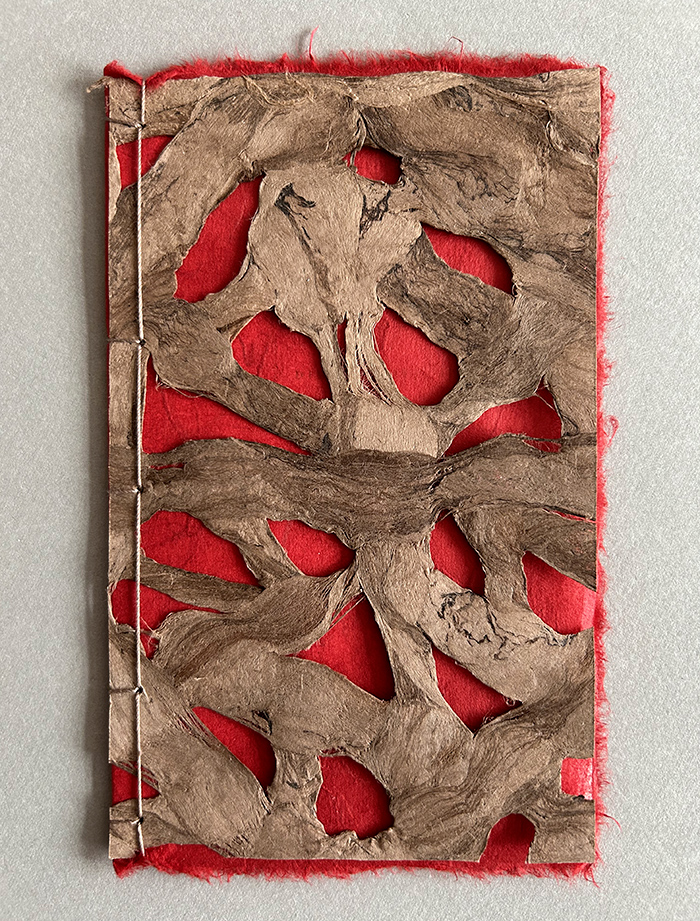
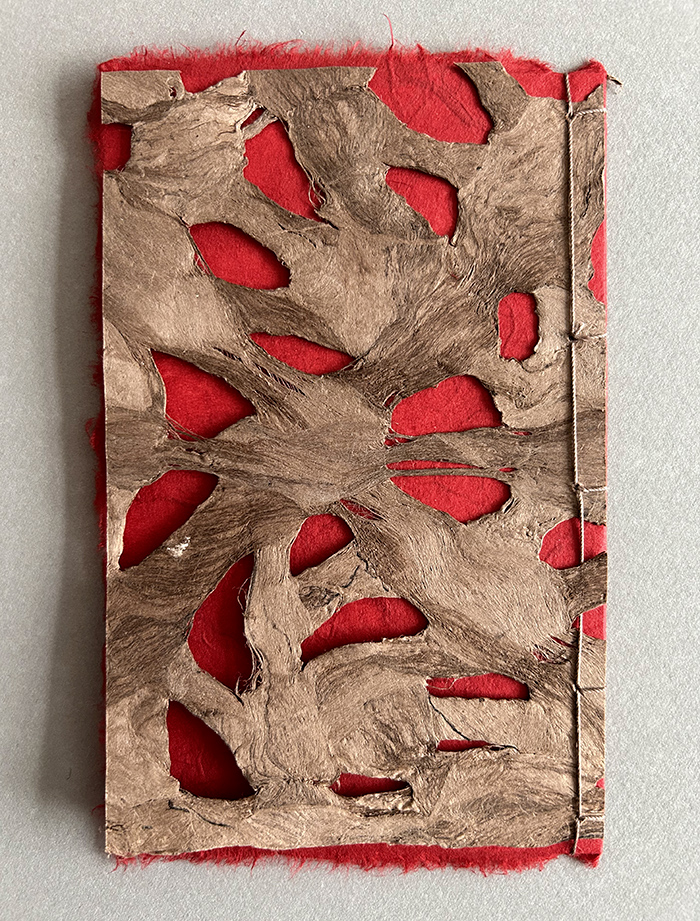
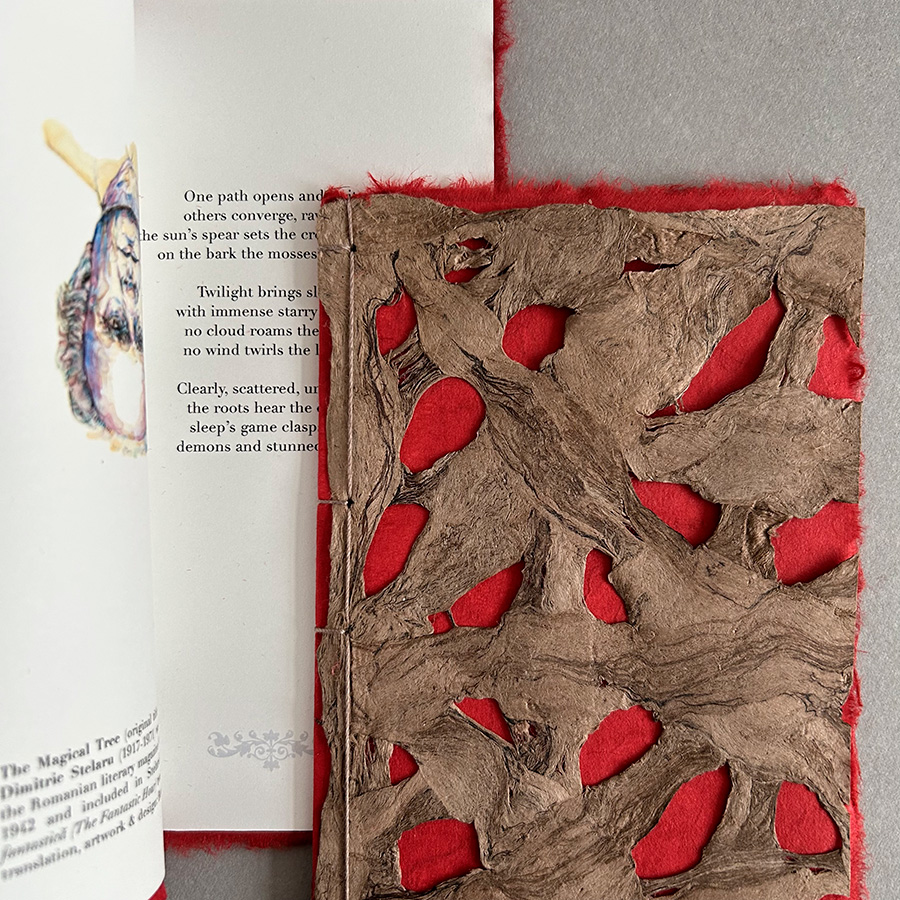
Stelaru’s poem Copacul magic (The Magical Tree) was first published in the literary magazine Preocupări literare in 1942 and included in Stelaru’s landmark compilation Ora fantastică (The Fantastic Hour) two years later. In his preface The Planet of a new Poet to that compilation, the influential Romanian critic Eugen Lovinescu hailed Stelaru as a visionary poet who manages to transform everyday existence into a highly individual mythology. The Magical Tree is a fine example of Stelaru’s intoxicated powers of imagination. In condensed lines the poet paints a solitary tree rooted in generous soil and vibrant with ‘demons and stunned birds’ against a dusking sky. Sea Urchin published Stelaru’s dreamlike poem as a limited edition pamphlet in April 2026, its cover of Mexican Amate paper (made from the bark of wild fig trees) and flyleaf of Thai Unryu paper (made from mulberry trees) in line with the theme of the poem. Edition of 15 hand made copies. English translation, artwork and design: Ben Schot.